



From Concept To Molded Plastic
Research on Application of Laser Surface Hardening in Precision Machining
In-depth Analysis on Pros andCons of Laser Surface Hardening
In the manufacturing of high-end precision components,surface strengthening processes directly determine the wear resistance, servicelife and dimensional stability of workpieces. As an innovative local heattreatment technology, laser surface hardening realizes selective rapid quenching via high-energy laserbeams and has been widely used for CNC precision machined parts in recent years. Compared with mature processessuch as carburizing and high-frequency induction quenching, laser hardeningfeatures minimal thermal deformation, selective regional treatment and lesssubsequent extensive finishing. Nevertheless, restricted by laser power,hardened layer depth and material compatibility, it faces obvious applicationlimitations. Combined with practical precision machining production experience,this paper systematically discusses process characteristics, advantages anddisadvantages of laser surface hardening, defines applicable and inappropriateworking conditions, and explores process optimization directions, helpingmanufacturers rationally arrange heat treatment procedures.
CurrentStatus of Surface Strengthening Technology for Precision Machining
Precision mechanical components frequently bear frictionand wear loads. Shafts, guide rails, gears, valve seats and medical equipmenttransmission components generally require high surface hardness while thesubstrate maintains good toughness. Traditional surface strengthening solutionscover carburizing quenching, nitriding treatment and induction quenching.However, these processes suffer from uncontrollable heating zones, overalltemperature rise of workpieces and hard-to-manage thermal deformation, whichare unfavorable for precisionparts with tight tolerances. Against this backdrop, laser surface hardening hasgradually become a vital alternative process in high-end precisionmanufacturing.
Thecore principle of laser surface hardening technology
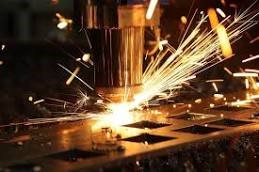
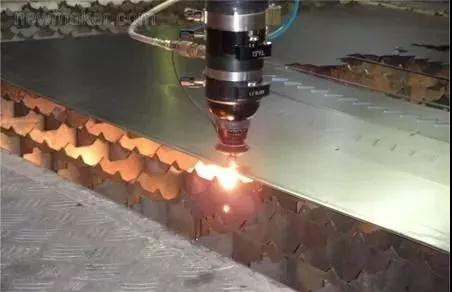
The principle of laser surface hardening: a laser beamwith high energy density rapidly scans designated zones of the workpiece. Themetal surface reaches austenitizing temperature within a short period, andself-quenching is realized via heat conduction of the workpiece substratewithout external coolant. A martensitic hardened layer forms on the surface toboost hardness and wear resistance, while the substrate microstructure remainsunchanged. Its most prominent feature is selective local heat treatment, whichfundamentally differentiates it from conventional heat treatment.
Thecore advantages of the laser surface hardening process
In terms of advantages, minimalthermal deformation ranks first. Laser heating takes place rapidly; heat onlyconcentrates on a thin surface layer while the substrate stays at lowtemperature. Dimensional deviation after treatment is far lower thancarburizing and induction quenching. For high-precision parts machined onfive-axis equipment, only simple polishing is required after laser hardening inmany cases, eliminating extensive secondary CNC machining, lowering manufacturingcosts and preserving micron-level dimensional tolerances. Secondly, the treatmentzone can be precisely defined. Linked with numerical control systems, the lasercan accurately follow programmed hardening paths. It enables targetedstrengthening on narrow grooves, partial tooth surfaces and special curvedsurfaces which are difficult to treat with traditional processes, ideal forcomplex precision components only requiring local wear resistance. Thirdly, thestreamlined process brings lower pollution. No carburizing medium or quenchingoil is needed, making it an environmentally friendly heat treatment technology.Fast heating and cooling shorten cycle time, facilitating integration intoautomated machining lines.
Shortcomingsand Application Limitations of Laser Surface Hardening Technology
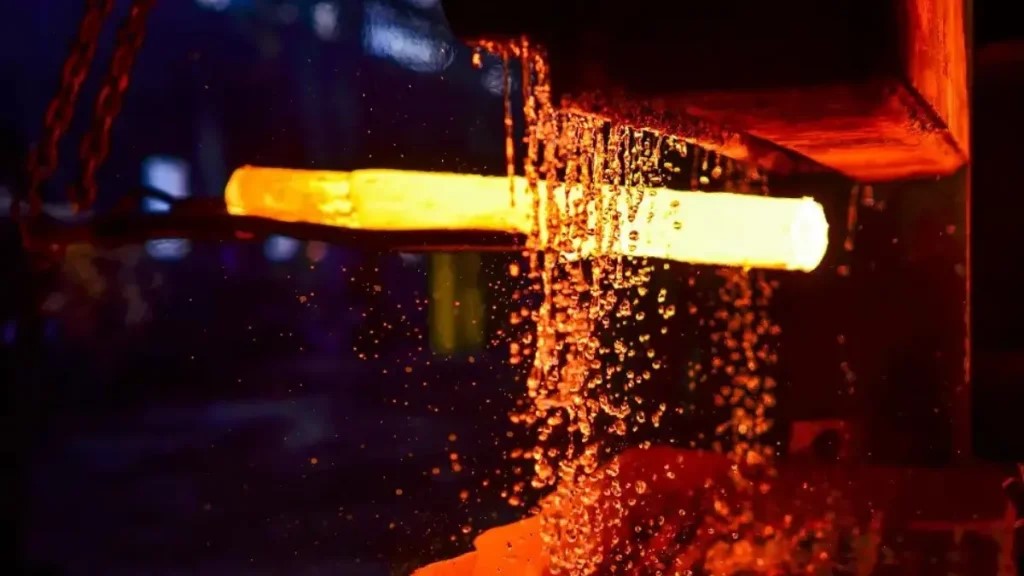
Nevertheless, laser surface hardening has noticeablelimitations constrained by physical principles and equipment conditions.Firstly, the achievable hardened layer depth is limited. Commercial industriallasers can stably form hardened layers ranging from 0.1 mm to 1.0 mm. Forcomponents under heavy load and impact wear requiring thick hardened layers,laser hardening cannot match the performance of carburizing quenching.Secondly, not all materials are suitable. Medium and low carbon steels plussome alloy structural steels achieve satisfactory hardening results, while highcarbon steel tends to generate surface cracks. Conventional laser treatmentbarely hardens certain high-alloy stainless steel and titanium alloys, creatingmaterial selection restrictions. Thirdly, high initial capital investment isrequired. Procurement and maintenance costs of complete laser heat treatmentequipment exceed induction quenching. Applying this process for mass-producedlow-value standard parts will greatly increase unit costs. Fourthly, theprocess is sensitive to workpiece surface conditions. Scale and uneven surfaceroughness change laser absorption rate and lead to inconsistent hardness, oftenrequiring extra surface pretreatment before processing.
Boundaryof Process Selection in Precision Machining Scenarios and Its PracticalApplication
For precisionmachining manufacturers, clarifying process boundaries is critical duringsolution selection. Laser surface hardening is preferred forprecision hydraulic valve assemblies, miniature precision gears, automation guiderails, medical transmission parts and lightweight aerospace structuralcomponents that demand local wear resistance, strict deformation control andmoderate hardened layer thickness. Heavily loaded construction machinery gearsand large-diameter pressure-bearing shafts requiring deep hardened layers stilladopt carburizing as the primary option.
Industryprocess iteration and future development trends
Many precisionmachining enterprises keep conducting process optimization tests. Beamshaping, overlapping multi-pass scanning and auxiliary preheating are adoptedto improve uniformity of hardened layers. Meanwhile, upgrading fiber laserpower gradually expands the achievable depth of hardened layers. As equipmentcosts reduce and process databases improve, laser surface hardening will gainlarger market share for high-end precision components. However, it cannotcompletely replace traditional heat treatment in the short run. Complementaryapplication of multiple surface strengthening technologies will remain themainstream solution of the industry.
Conclusion
Laser surface hardening is a distinctivesurface strengthening process catering to differentiated demands withinprecision machining. Its strengths including low deformation, controllabletreatment area, environmental friendliness and high efficiency perfectlysatisfy strict requirements on dimensional stability and localizedstrengthening for precision parts used in aerospace, medical and automation equipment.Nonetheless, limitations on hardened layer depth, material compatibility andequipment costs set clear application boundaries. Precisioncomponent manufacturers should not blindly replace all traditionalheat treatment with laser hardening. Comprehensive evaluation based onworkpiece load condition, material grade, dimensional tolerance and productioncost is necessary to rationally combine carburizing, nitriding, laser hardeningand other technologies. In the long term, continuous improvement of laserhardening parameter systems and lower barriers for laser equipment will furtherunlock the value of this technology in high-end precision manufacturing,enabling precision machining factories to produce more reliable wear-resistantcomponents and strengthen competitiveness in the global marketplace.


