



From Concept To Molded Plastic
How CNC Machined Manifolds Improve Fluid Control Reliability
Why PrecisionManifolds Matter in Industrial Fluid Systems
Hydraulic and pneumaticsystems play an important role in modern industrial equipment. From automatedproduction lines and packaging machinery to hydraulic power units and fluidcontrol assemblies, these systems depend on accurate fluid distribution tooperate safely and efficiently.
One component thatdirectly influences system performance is the manifold block.
A manifold is designed toconnect multiple fluid passages, valves, fittings, and control elements withina compact structure. Although it may appear to be a simple metal block, itsinternal geometry and machining accuracy can have a significant impact onpressure stability, sealing performance, and overall equipment reliability.
For equipmentmanufacturers, choosing high-quality CNC Machined Manifolds can help simplifyassembly, improve dimensional consistency, and reduce the risk of fluidleakage.
At K-TEK Machining, wesupport custom manifold manufacturing based on customer drawings, materialspecifications, and application requirements.
https://www.k-tekparts.com/cnc-machined-manifolds-product/?utm_source=chatgpt.com
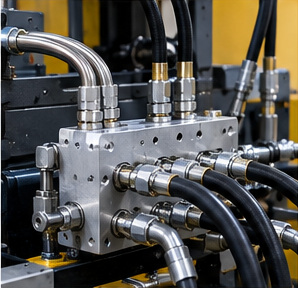
What Are CNC MachinedManifolds?
CNC machined manifoldsare precision-engineered components used to distribute or control the flow ofliquids and gases within mechanical systems.
Unlike conventionalpiping assemblies that require numerous individual connectors, a manifoldintegrates multiple flow paths into a single component.
Typical manifoldfeatures include:
·
Internaldrilled channels and intersecting passages
·
·
Threadedports for valves and fittings
·
·
Precisionsealing surfaces
·
·
Mountingholes and locating features
·
·
Cross-drilledholes and plugged passages
·
·
Customcavities for fluid control components
·
Depending on theapplication, manifolds can be manufactured from aluminum alloys, stainlesssteel, brass, carbon steel, or other suitable engineering materials.
Their design mustbalance flow requirements, mechanical strength, manufacturability, and ease ofassembly.
1. Accurate InternalChannels Support Consistent Fluid Flow
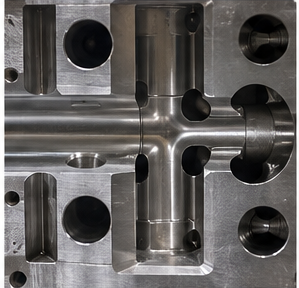
One of the mostimportant manufacturing challenges in manifold production is the accuracy ofinternal flow passages.
Hydraulic and pneumaticmanifolds often contain multiple drilled channels that intersect at specificpositions. If these passages are misaligned, the result may be restricted flow,unwanted pressure losses, or incomplete connections between ports.
Precision CNC machininghelps control critical characteristics such as hole diameter, drilling depth,intersection position, and port alignment.
For example, ahydraulic manifold with several valve connections may require closelycontrolled drilling operations to ensure that each passage communicates withthe intended port.
Accurate machining alsohelps reduce unnecessary restrictions within the flow path.
During manufacturing,careful attention must be paid to burr removal and internal cleanliness. Loosechips or sharp edges inside a manifold can interfere with valves, seals, ordownstream equipment.
For this reason,deburring, cleaning, and inspection should be considered essential parts of themanufacturing process rather than optional finishing steps.
2. CNC MillingImproves Port and Mounting Accuracy
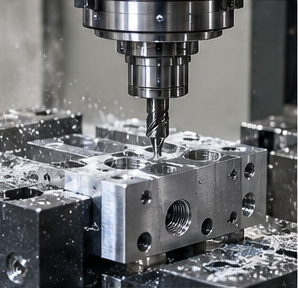
Many manifold blocksfeature flat mounting surfaces, threaded ports, recessed cavities, andprecisely positioned holes.
These features mustalign correctly with valves, fittings, and adjacent mechanical components.
Using professional CNC Milling Services, manufacturers canproduce complex manifold geometries while maintaining consistent dimensionalcontrol.
CNC milling isparticularly useful for:
·
Producingflat valve mounting surfaces
·
·
Machiningprecision pockets and recesses
·
·
Creatingaccurate bolt-hole patterns
·
·
Controllingthe position of threaded ports
·
·
Manufacturingcustomized manifold shapes
·
For industrialequipment manufacturers, accurate mounting interfaces can reduce assemblyadjustments and help components fit correctly during installation.
Where several sides ofa manifold require machining, careful setup planning is also important tomaintain alignment between features.
https://www.k-tekparts.com/cnc-milling-services-product/?utm_source=chatgpt.com
3. Multi-AxisMachining Supports Complex Manifold Designs
Modern fluid controlsystems are becoming more compact, particularly in automated machinery andintegrated equipment assemblies.
As a result, manifolddesigns may require ports on several faces, angled passages, and complexexternal profiles.
Conventional machiningcan produce many of these features, but repeated repositioning may increasesetup time and introduce additional opportunities for alignment error.
For suitablegeometries, 5 Axis CNC Machining Services can providemore flexible access to multiple surfaces and angled features.
Multi-axis machiningcan be especially beneficial when a manifold includes:
·
Angleddrilling features
·
·
Multi-sidedvalve connections
·
·
Complexmounting interfaces
·
·
Space-savingexternal geometries
·
·
Featuresthat are difficult to access with standard setups
·
However, not everymanifold requires five-axis machining. The most economical process depends onthe part geometry, tolerance requirements, order quantity, and availabletooling.
A practicalmanufacturing review helps determine whether conventional three-axis milling,indexed multi-axis machining, or simultaneous five-axis machining is the bestsolution.
https://www.k-tekparts.com/5-axis-cnc-machining-services-product/?utm_source=chatgpt.com
4. Material SelectionAffects Manifold Performance
Selecting the correctmaterial is another important part of manifold manufacturing.
Different fluid systemsoperate under different pressure, temperature, corrosion, and mechanicalloading conditions.
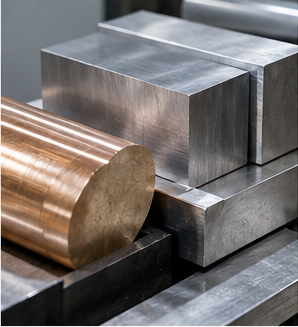
Aluminum Manifolds
Aluminum alloys such as6061 and 7075 offer good machinability and relatively low weight.
They are oftenconsidered for pneumatic equipment, compact automation assemblies, andhydraulic applications where the design and operating conditions permit.
Aluminum manifolds mayalso receive suitable surface treatments when additional corrosion or wearprotection is required.
Stainless SteelManifolds
Stainless steel gradessuch as 304 and 316 are useful for applications that require improved corrosionresistance.
They may be selectedfor chemical processing equipment, fluid handling systems, and environmentsexposed to moisture or certain corrosive media.
Material compatibilitymust still be checked against the specific fluid and operating conditions.
Brass Manifolds
Brass offers goodmachinability and is commonly used in selected pneumatic, water distribution,and fluid connection applications.
It can be a practicaloption for smaller manifold blocks and fittings, depending on pressure andfluid compatibility requirements.
The final materialchoice should be based on engineering calculations and the equipmentmanufacturer's specifications rather than machining convenience alone.
5. Sealing SurfacesRequire Careful Dimensional Control
Even when internalpassages are machined correctly, poor sealing surfaces can lead to fluidleakage.
Manifold assembliesfrequently use O-rings, gaskets, threaded fittings, or other sealing elementsto maintain system integrity.
The performance ofthese interfaces depends on several factors:
·
Surfaceflatness
·
·
Surfaceroughness
·
·
Groovedimensions
·
·
Holeposition
·
·
Threadquality
·
·
Materialand seal compatibility
·
For example, an O-ringgroove that is too deep or too shallow may prevent the seal from achieving itsintended compression.
Likewise, excessivesurface roughness or damaged sealing areas can increase the risk of leakage.
Manufacturers shouldtherefore identify critical sealing features on the engineering drawings andspecify appropriate dimensional and surface finish requirements.
Surface finishing alsodeserves attention. Processes such as anodizing or coating can affect finaldimensions, especially around precision fits and threaded areas.
For further technicalguidance, K-TEK has published an article titled How Post-Processing Affects Dimensional Tolerance ofCNC-Machined Parts, which discusses the relationship betweenfinishing processes and dimensional accuracy.
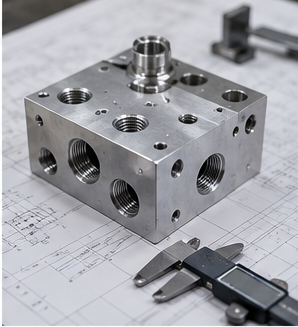
6. Inspection andCleaning Help Prevent Assembly Problems
Reliable manifoldmanufacturing requires more than accurate cutting operations.
Before delivery,important dimensions and functional features should be verified according tothe approved drawings.
Typical inspectionitems include:
·
Overalldimensions and mounting hole positions
·
·
Portlocations and thread specifications
·
·
Flatnessof sealing and mounting surfaces
·
·
Drilledpassage depth and diameter
·
·
Surfacefinish of critical interfaces
·
·
Visualcondition of internal passages
·
Coordinate measuringmachines, precision gauges, thread gauges, and other suitable inspectionequipment can be used depending on the component requirements.
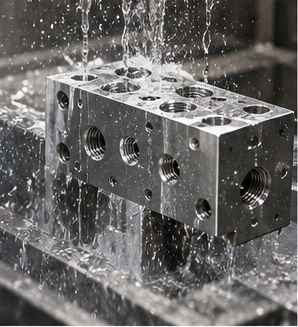
Internal cleanliness isequally important.
Machining chips,residual cutting fluid, or debris left inside the passages can cause problemsduring equipment operation. Appropriate cleaning methods and cleanlinessacceptance criteria should therefore be agreed upon when necessary.
For pressure-containingapplications, leak testing or pressure testing may also be required, dependingon the customer's specifications and the intended service conditions.
These tests should bedefined during the quotation or engineering review stage rather than assumed tobe included in every machining order.
7. Design forManufacturing Can Reduce Production Costs
For custom manifoldblocks, early manufacturing feedback can help equipment designers avoid unnecessarycomplexity.
Several designconsiderations may improve manufacturability:
Avoidunnecessary deep drilling. Very deep,small-diameter passages can require specialized tooling and additional processcontrol.
Simplifyintersecting channels. Clear passage layoutscan reduce machining complexity and make internal deburring and cleaningeasier.
Standardizethreaded ports where practical. Common threadspecifications can simplify tooling, inspection, and assembly.
Specifytolerances based on function. Applyingextremely tight tolerances to every feature may increase cost without improvingperformance.
Providecomplete drawings. Port specifications,sealing details, surface finish requirements, and inspection criteria should beclearly defined.
By reviewing thesedetails before production, manufacturers can identify potential machiningchallenges and recommend practical improvements.
8. Applications of CNCMachined Manifolds
Custom manifold blocksare used across a wide range of industries.
In hydraulic equipment,they help integrate valves and fluid passages into compact control assemblies.
In pneumatic automationsystems, manifolds distribute compressed air to actuators, cylinders, andcontrol devices.
Packaging machinery andautomated production equipment may use manifold blocks to reduce externaltubing and simplify equipment layouts.
Other applicationsinclude industrial fluid control systems, machinery assemblies, and specializedequipment developed around custom mechanical designs.
Although the specificgeometry varies, the manufacturing objective remains consistent: accurateinterfaces, reliable sealing, and repeatable component quality.
Custom CNC ManifoldManufacturing at K-TEK
K-TEK Machiningprovides customized CNC machining support for manifold blocks and otherprecision mechanical components used in industrial equipment.
Our machiningcapabilities include CNC milling, CNC turning, and multi-axis machining forparts manufactured according to customer drawings.
We work withengineering materials such as aluminum, stainless steel, brass, and steel, withinspection requirements determined by the component design and customerspecifications.
From prototypedevelopment to production orders, our goal is to help equipment manufacturersobtain accurately machined parts that integrate smoothly into their assemblies.
If you are developing anew hydraulic, pneumatic, or industrial automation system, feel free to send usyour technical drawings, material requirements, quantities, and applicationdetails.
Our team can review themanufacturing requirements and provide a quotation for your custom CNC machinedmanifold project.


