



From Concept To Molded Plastic
6061 vs 7075 Aluminumfor CNC Machining: How to Choose
Meta Description
Compare 6061 and 7075aluminum for CNC machining, including strength, machinability, corrosionresistance, anodizing, cost, and applications.
Keywords
6061 aluminum CNC machining,7075 aluminum CNC machining, 6061 vs 7075 aluminum, aluminum CNC machining, CNCmachined aluminum parts, aluminum alloy machining, 7075 CNC parts, 6061 CNCparts, precision aluminum machining, anodized aluminum parts, lightweight CNCparts, aerospace aluminum machining, robotics aluminum parts, motorsport CNCparts, custom aluminum parts
English Version
H1
6061 vs 7075 Aluminumfor CNC Machining: How to Choose
H2
Why 6061 and 7075 AreSo Common in CNC Machining
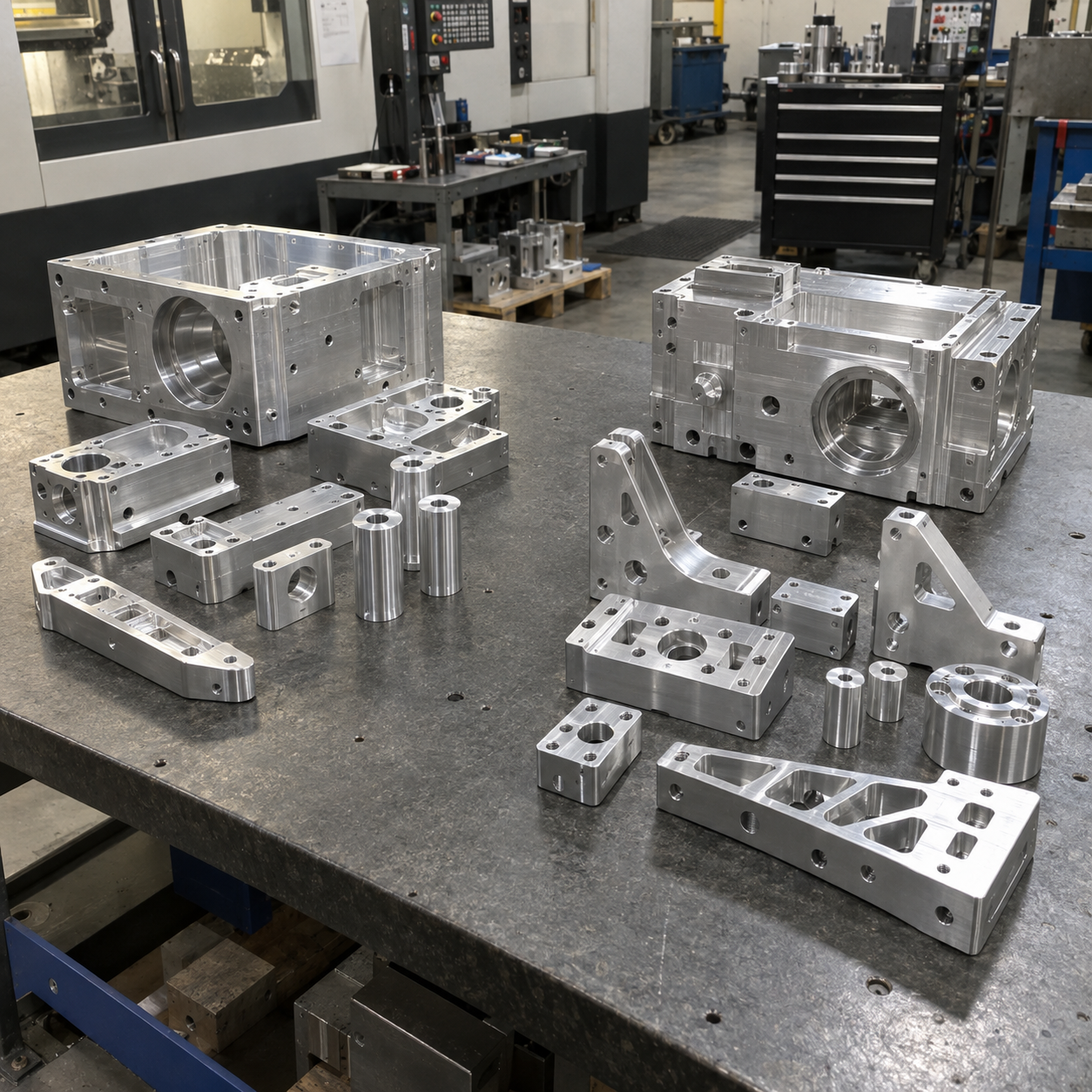
Aluminum is one of themost widely used materials in precision CNC machining because it combines lowweight, good machinability, corrosion resistance, and a wide range of availablegrades.
Among the many aluminumalloys used in manufacturing, 6061 and 7075 are two of the most common choicesfor custom machined components.
At first glance, theymay look very similar. Both can be milled, turned, drilled, threaded, anodized,and used for complex precision parts. However, their mechanical properties,cost, corrosion behavior, and typical applications are quite different.
Choosing between 6061aluminum and 7075 aluminum should therefore be based on how the final componentwill be used rather than simply selecting the stronger or cheaper material.
For designers andbuyers, understanding these differences can help avoid unnecessary materialcost while ensuring that the component has enough strength and durability forits application.
H2
What Is 6061 Aluminum?
6061 is aheat-treatable aluminum alloy widely used for structural and general engineeringcomponents.
It is commonly selectedbecause it provides a useful balance of strength, machinability, corrosionresistance, weldability, availability, and cost.
In CNC machining, 6061is frequently used for housings, brackets, mounting plates, fixtures,structural components, automation parts, electronic enclosures, and generalmachine components.
The T6 condition isparticularly common. 6061-T6 has already undergone heat treatment to improveits mechanical properties and is readily available as plate, bar, tube, andother stock forms.
For many industrialproducts, 6061 provides more than enough strength without requiring the highermaterial cost associated with some high-strength aluminum alloys.
H2
What Is 7075 Aluminum?
7075 is a high-strengthaluminum alloy typically selected when structural performance is more importantthan general-purpose versatility.
It contains zinc as amajor alloying element and can achieve significantly higher strength than 6061in commonly used heat-treated conditions.
Because of this, 7075aluminum CNC machining is widely associated with aerospace structures,motorsport components, high-performance mechanical parts, robotics, lightweightstructural assemblies, and other applications where a high strength-to-weightratio is important.
7075-T6 is one of themost common conditions used for machined components.
Its higher strength canallow engineers to design smaller or lighter parts while maintaining structuralperformance. However, the material usually costs more than 6061 and is notalways necessary for ordinary mechanical components.
H2
6061 vs 7075: Strength
Strength is one of themost important differences between these two materials.
7075 is generally muchstronger than 6061. This makes it attractive for highly loaded structuralcomponents, suspension parts, aerospace brackets, high-performance frames, andother applications where mechanical stress is significant.
However, higherstrength does not automatically make 7075 the better choice.
A machine cover,electronics housing, sensor bracket, inspection fixture, or light-dutyautomation component may never experience loads high enough to justify 7075.
In these cases, using6061 may reduce both material cost and machining cost while still providingsufficient performance.
The material shouldtherefore be selected according to actual loading conditions, safetyrequirements, geometry, and expected service life.
H2
Machinability of 6061and 7075
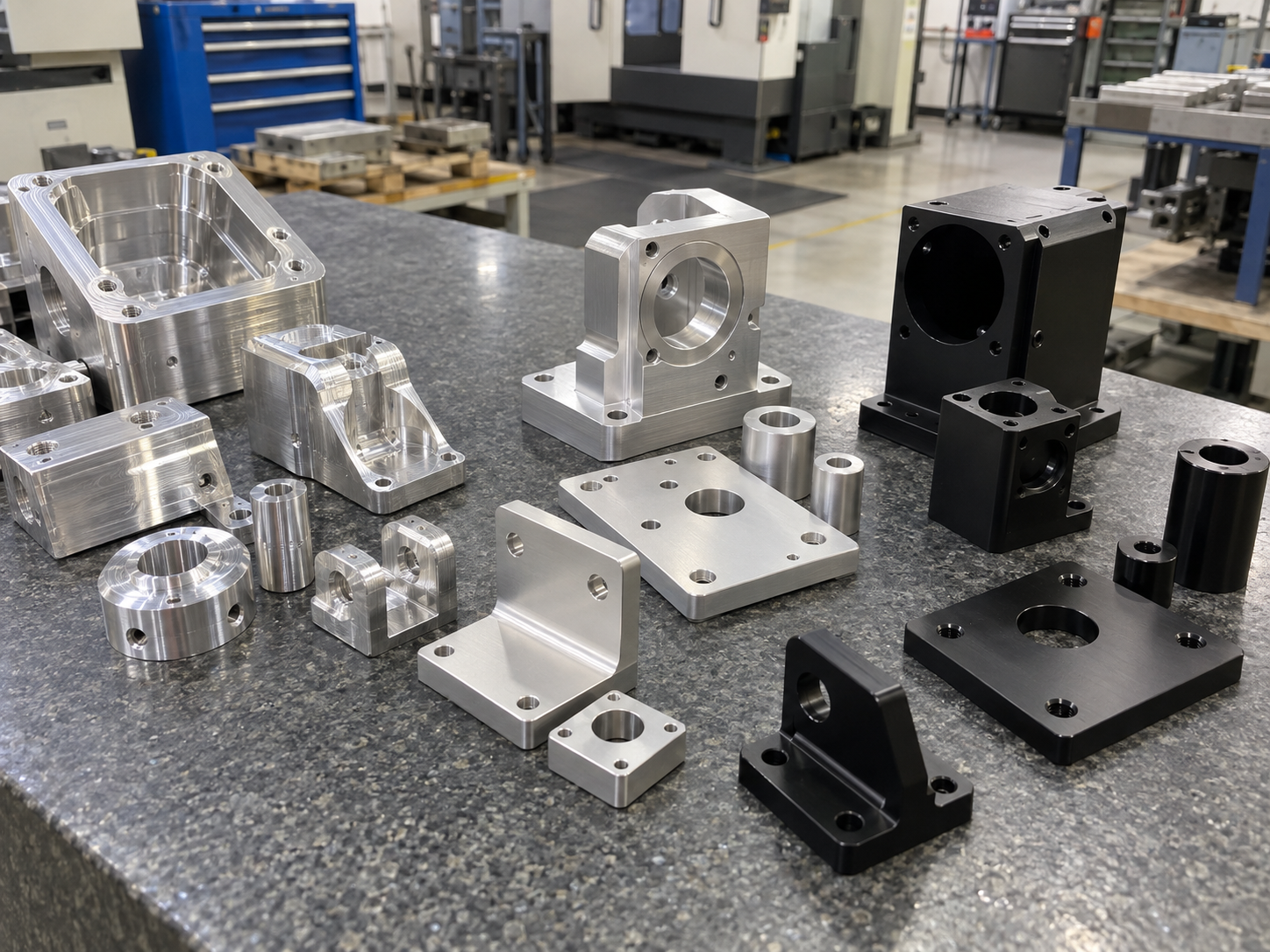
Both alloys are wellsuited to CNC machining.
6061 generally machinessmoothly and predictably. It is widely available, relatively forgiving, andsuitable for milling, turning, drilling, tapping, boring, and multi-axismachining.
7075 also offers goodmachinability. In many cases, its higher hardness and rigidity can help createclean machined features and good surface quality.
However, machiningparameters still need to be adjusted according to the exact material condition,geometry, cutting tool, and operation.
Thin walls, deeppockets, long tool reach, and highly detailed structures can create machiningchallenges regardless of whether the material is 6061 or 7075.
For high-precisioncomponents, good fixturing, sharp tools, appropriate cutting parameters, and astable machining strategy are often more important than the small machinabilitydifferences between the two alloys.
H2
Dimensional StabilityDuring Machining
Dimensional stabilitymatters when machining large pockets, thin walls, long parts, or componentsthat require significant material removal.
Removing a large amountof material can release internal stress from the stock and cause slightmovement in the component.
This is not unique toeither 6061 or 7075. Stock condition, manufacturing history, part geometry,machining sequence, and clamping strategy all influence the result.
For difficultcomponents, the machining process may include rough machining first, allowingthe part to stabilize, and then completing critical dimensions during finishingoperations.
Symmetrical materialremoval can also help reduce distortion in some designs.
When tight flatness,perpendicularity, or positional tolerances are required, material selectionshould therefore be considered together with the machining strategy.
H2
Corrosion Resistance
6061 generally offersgood corrosion resistance and is commonly used in industrial equipment, outdoorstructures, automation systems, electronics, and general mechanicalapplications.
7075 provides excellentmechanical strength, but its corrosion resistance is generally less favorablethan 6061 in some environments.
For applicationsexposed to moisture, chemicals, salt, or outdoor conditions, designers shouldconsider both the base material and the planned surface treatment.
Anodizing and otherprotective finishes can improve the surface properties of aluminum components.
The operatingenvironment should therefore be considered before selecting a high-strengthalloy purely for mechanical performance.
H2
Anodizing 6061 and 7075Aluminum
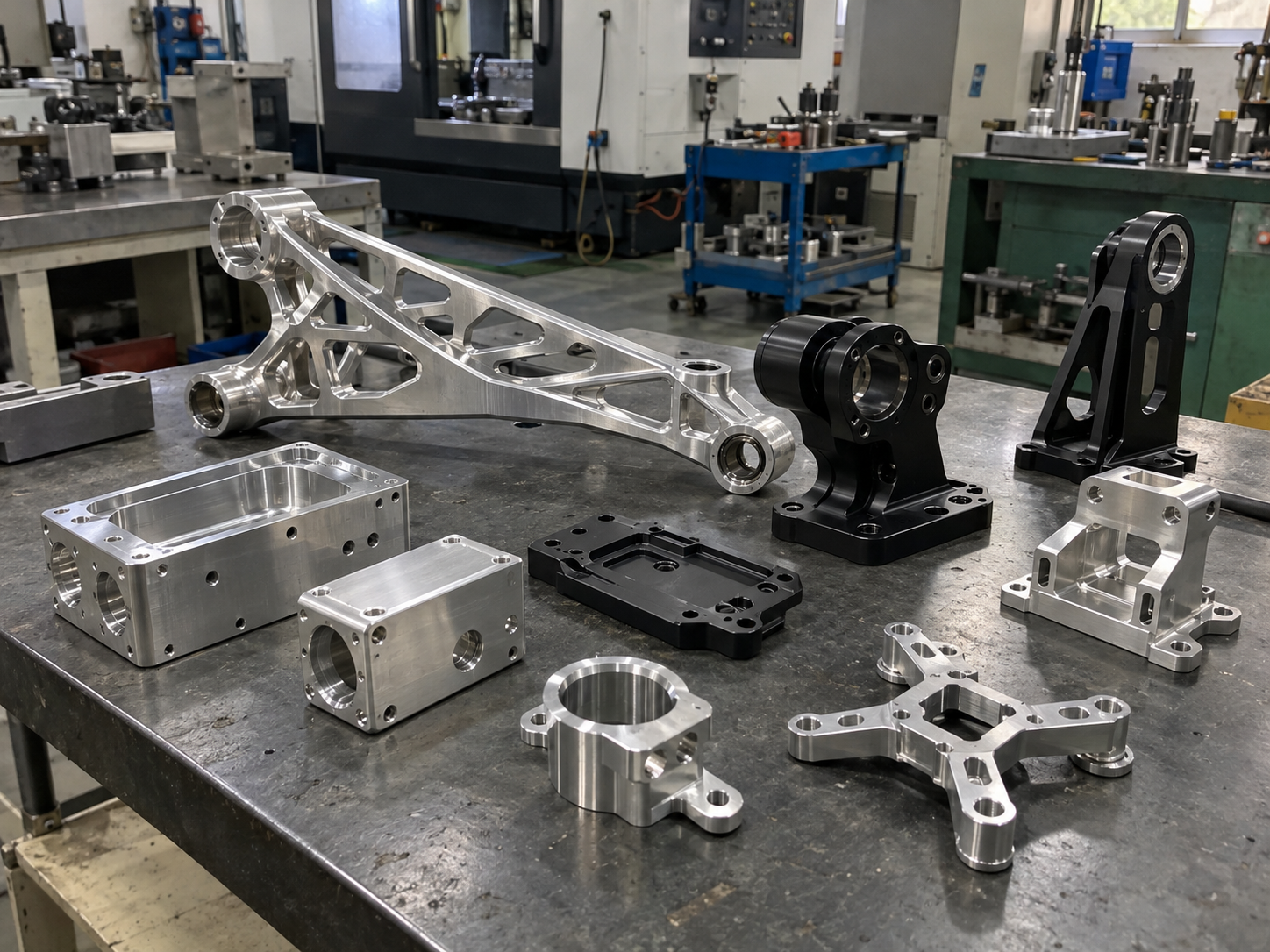
Both 6061 and 7075 canbe anodized, but the final appearance may differ depending on alloycomposition, heat treatment, surface preparation, and anodizing process.
6061 is widely used forcomponents that require decorative or functional anodizing. Clear, black, andcolored anodized finishes are common for housings, brackets, machine parts,electronics components, and automation equipment.
7075 can also beanodized and is frequently treated when additional surface protection isneeded.
However, buyers shouldavoid assuming that two different aluminum alloys will produce exactly the sameanodized appearance.
If cosmetic consistencyis important, the alloy, surface preparation, batch conditions, and finishspecification should be controlled carefully.
H2
Weight DifferenceBetween 6061 and 7075
Both 6061 and 7075 arealuminum alloys, so their densities are relatively close.
In most practicalcomponent designs, switching from 6061 to 7075 without changing geometry doesnot create a dramatic weight reduction.
The real lightweightadvantage of 7075 comes from its higher strength.
Because the materialcan withstand greater mechanical loads, engineers may sometimes reduce wallthickness or redesign the component to use less material while maintaining therequired structural performance.
This is especiallyuseful in weight-sensitive industries such as motorsport, aerospace, drones,robotics, and high-speed automation.
However, suchoptimization should be supported by engineering calculations rather than simplyreducing material thickness because a stronger alloy is being used.
H2
6061 vs 7075 forMotorsport Components
Motorsport provides agood example of how the two materials can be used differently.
Many non-criticalbrackets, housings, covers, spacers, and mounting components can bemanufactured successfully from 6061.
Highly loadedcomponents may benefit from 7075, particularly when strength and weight areboth important.
Examples may includecertain suspension components, structural brackets, linkages, mounts, and otherperformance-oriented parts.
However, the correctmaterial depends on the actual load case and design.
A racing componentshould never be changed from one alloy to another solely because one materialappears stronger on a datasheet. Fatigue, impact, geometry, safety factors,surface treatment, and the complete assembly must also be considered.
H2
6061 vs 7075 forRobotics and Automation
Robotics and automationequipment also use both alloys.
6061 is commonlysuitable for robot housings, mounting plates, end-effector components, sensorbrackets, motor mounts, frames, and other structural parts.
For lightweight roboticarms, high-load joints, fast-moving structures, or components where reducingmass can improve motion performance, 7075 may be considered.
Lower moving mass canreduce inertia, which may be useful in high-speed systems.
However, cost remainsan important consideration. If the part does not require the additionalstrength of 7075, 6061 may provide a more economical choice for production.
Good material selectiontherefore balances performance and manufacturing cost rather than maximizingone property.
H2
6061 vs 7075 for Droneand Aerospace Parts
Weight is particularlyimportant for UAV and aerospace components.
7075 is oftenassociated with aerospace structures because of its high strength-to-weightratio. It can be useful for structural brackets, frames, precision joints, andother mechanically demanding parts.
6061 also has manyaerospace and UAV applications, particularly for housings, fixtures,prototypes, support structures, and components that do not require maximumstrength.
For drone components,designers should consider more than just material strength.
Machining complexity,vibration, fatigue, fastener loads, environmental exposure, weightdistribution, and production quantity may all influence the final materialchoice.
A carefully optimized6061 design can sometimes outperform a poorly optimized 7075 design in terms oftotal cost and manufacturability.
H2
Cost Difference Between6061 and 7075
6061 is generally themore economical option.
It is widely availableand commonly stocked by material suppliers, helping make it attractive forprototypes, fixtures, industrial equipment, and production components.
7075 normally carries ahigher raw material cost.
The final pricedifference for a CNC machined component also depends on stock size, materialutilization, machining time, scrap rate, tolerance, surface treatment, andorder quantity.
For a small precisionpart, machining time may represent a large portion of the total cost, which meansthe difference in raw material price may have only a moderate effect.
For large parts withsignificant material volume, however, the material price difference can becomemuch more important.
This is another reasonwhy material selection should happen during the design stage rather than afterthe component is fully designed.
H2
When Should You Choose6061?
6061 is often a goodchoice when the application requires good general mechanical strength,corrosion resistance, machinability, reliable anodizing, reasonable materialcost, easy availability, and general industrial performance.
Typical applicationsinclude equipment housings, brackets, mounting plates, fixtures, automationcomponents, electronic enclosures, machine structures, and prototypes.
For many CNC machinedaluminum components, 6061 is an effective default choice unless the design hasa specific reason to require a stronger alloy.
H2
When Should You Choose7075?
7075 becomes moreattractive when the application requires higher mechanical strength, a highstrength-to-weight ratio, reduced structural weight, performance under higherloads, or a compact high-strength design.
Typical applicationsmay include aerospace structural components, racing parts, high-performancerobotics, precision mechanical structures, and other demanding components.
The additional materialperformance should provide a real functional advantage because 7075 usuallycomes with a higher material cost.
H2
How to Choose Between6061 and 7075
The decision shouldbegin with the actual operating requirements.
If the component islightly or moderately loaded and needs good corrosion resistance,machinability, and cost efficiency, 6061 is often sufficient.
If the part is highlyloaded and weight reduction is important, 7075 may provide better performance.
Designers shouldconsider how much load the component will experience, whether weight reductionis important, whether the part will operate outdoors or in a corrosiveenvironment, whether anodizing is required, whether cosmetic consistencymatters, and whether the additional mechanical properties of 7075 are actuallynecessary.
Answering thesequestions usually makes the material decision much easier.
H2
Do Not Select Materialby Strength Alone
Material datasheets areuseful, but engineering decisions should not be based on a single number.
A component may failbecause of fatigue, excessive deflection, corrosion, stress concentration, poorsurface condition, incorrect tolerances, or assembly problems even if the basematerial has very high tensile strength.
Manufacturability alsomatters.
An expensivehigh-strength alloy may provide little benefit if the component does notexperience significant mechanical loads.
Likewise, selecting alower-cost alloy can become expensive if the component must later be redesignedbecause its strength is insufficient.
Material selectionshould therefore combine mechanical performance, manufacturing requirements,environment, cost, and expected service conditions.
H2
Conclusion
6061 and 7075 are bothexcellent aluminum alloys for CNC machining, but they serve differentengineering priorities.
6061 provides a strongbalance of machinability, corrosion resistance, availability, surface finishingcapability, and cost. It is suitable for a wide range of industrial andmechanical components.
7075 providessignificantly higher strength and is particularly useful for high-performance,highly loaded, and weight-sensitive applications.
The best choice is notautomatically the strongest alloy.
By considering load,environment, geometry, surface treatment, manufacturing cost, and actualapplication requirements, engineers can select the aluminum grade that providesthe best overall performance for the component.
H2
CTA
Need custom 6061 or7075 aluminum CNC machined parts? Send us your drawings, quantities, surfacetreatment requirements, and application details. Our engineering team canreview the project and help determine an appropriate machining process.


